Bonus Pathways in Modern Casinos: Connecting Slots, Tables, and Player Rewards
Written by Freya Vogel · Aug 4, 2026
Bonus Pathways in Modern Casinos: Connecting Slots, Tables, and Player Rewards
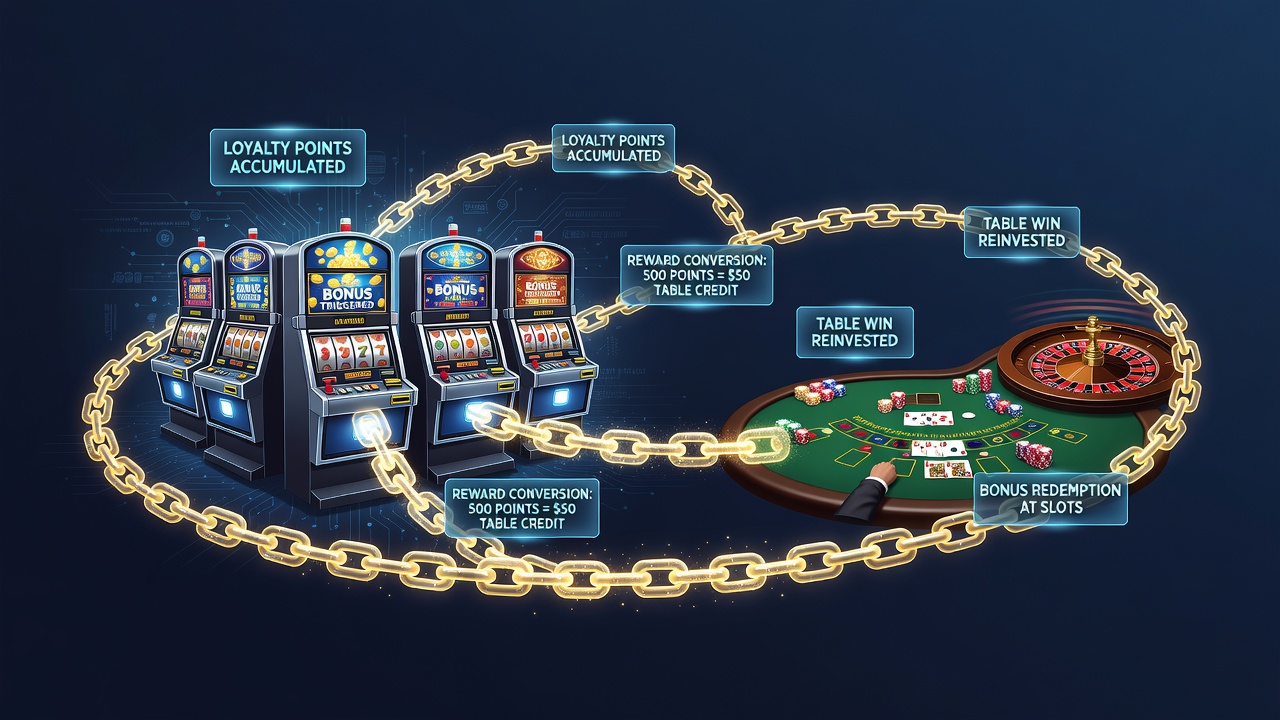
Modern casino operators design reward structures that allow promotional funds to move across game categories, creating chains where bonuses earned on slots can convert into table game play and sometimes return to slots after specific conditions are met. These systems rely on wagering requirements, game contribution percentages, and loyalty tiers that track activity across verticals rather than isolating each game type.
Slots typically contribute 100 percent toward wagering requirements because they generate high volume through rapid spins, whereas table games such as blackjack or roulette often count at lower rates like 10 or 20 percent. This weighting encourages players to begin with slots to clear bonus conditions faster before shifting to tables, where the lower contribution rate extends the play period and increases overall handle for the operator.
Mechanics of Cross-Game Bonus Transfers
Casino software platforms track bonus balances separately from cash balances, applying different rules depending on the game selected. When a player activates a slot bonus, the system records each spin against the requirement; once the threshold is reached, the remaining funds become available for table games without additional deposits in many cases. Observers note that this flow prevents immediate cashouts and keeps balances circulating within the casino ecosystem for longer periods.
Some programs introduce hybrid promotions where a percentage of slot winnings automatically converts into table game credits, often with a time limit such as 24 or 48 hours. Data from industry reports indicate that these timed transfers increase table game participation by directing players who might otherwise cash out after a slot session.
Role of Loyalty Programs in Sustaining the Chain
Loyalty schemes assign points based on theoretical win rather than actual results, allowing points earned from slot play to unlock table game perks such as match-play vouchers or reduced rake. Players accumulate tier credits across both categories, which means high slot volume can accelerate access to VIP table benefits like private dealer sessions or higher betting limits. Research from the American Gaming Association shows that integrated point systems raise cross-category engagement compared with siloed rewards.
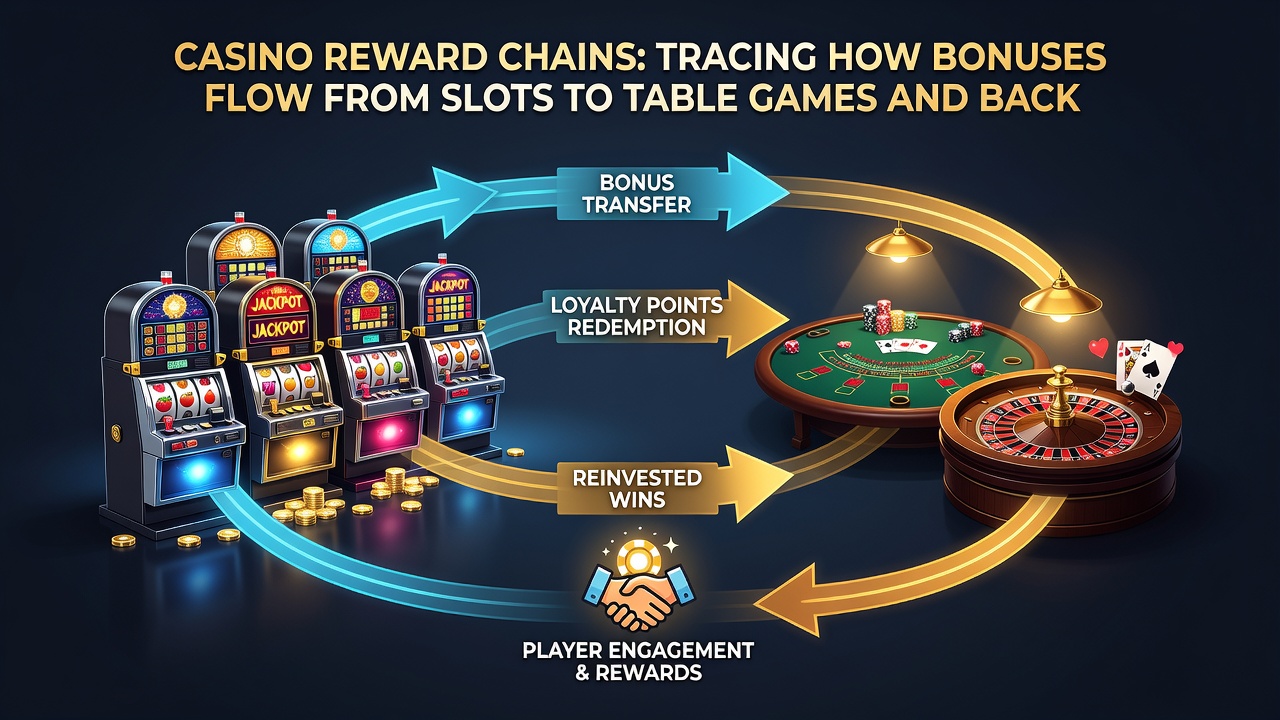
Reverse flows occur when table game bonuses convert back into slot credits after players meet table-specific playthrough targets. This reversal often appears in seasonal campaigns where operators aim to balance floor traffic between busy table pits and quieter slot banks during off-peak hours. The structure uses contribution multipliers that favor tables initially but then unlock slot-only bonuses once table requirements are satisfied.
Regulatory and Technical Frameworks Supporting These Chains
Regulatory bodies in multiple jurisdictions require clear disclosure of contribution rates and transfer rules so players understand how bonuses migrate. In August 2026 several North American and European markets updated reporting standards for promotional accounting, requiring operators to log cross-game movements separately from single-category play. These changes allow regulators to monitor whether bonus chains disproportionately favor certain game types or player segments.
Technical integration through central management systems ensures that bonus wallets update in real time across slots and tables. When a player switches from a slot machine to a roulette table, the platform applies the correct contribution rate automatically and adjusts the remaining requirement without manual intervention. This automation reduces disputes and maintains consistent application of terms across sessions.
Examples from Operational Data
One large resort group reported that 68 percent of slot bonus redemptions transitioned to table play within the same visit during a monitored quarter, while 31 percent of table-derived bonuses returned to slots after players completed their table requirements. Similar patterns appear in reports from the European Gaming and Betting Association, which tracks promotional efficiency across multi-game environments. These figures illustrate how reward chains function as circulation mechanisms rather than one-way incentives.
Operators adjust contribution percentages seasonally to steer traffic. During high-demand periods for table games, slot bonuses may carry higher table contribution rates to encourage quicker shifts; conversely, quieter periods feature boosted slot contributions from table bonuses to fill machine banks. Such adjustments rely on real-time occupancy data fed into the same management platforms that handle bonus accounting.
Conclusion
Casino reward chains operate through layered rules that connect slot and table activity into continuous cycles. Contribution rates, loyalty point systems, and automated wallet transfers create pathways that direct play across categories while satisfying regulatory transparency requirements. Data collected through these systems informs future promotions and helps operators maintain balanced utilization of both slot floors and table pits throughout the year.